
Drexel University
Master of Business Administration
AACSB-Accredited MBA with 5 Specializations
Enroll Now
Free consultation — no commitment required.
Delivering personalized support to help students unlock the best international education opportunities.

Admission Rate
98%
Across all destinations
Avg. Cost Savings
₹20L*
vs. self-managed admissions
300+
Partner Universities
50+
Destinations Covered
98%
Admission Rate
₹20L*
Avg. Cost Savings
*vs. self-managed admissions
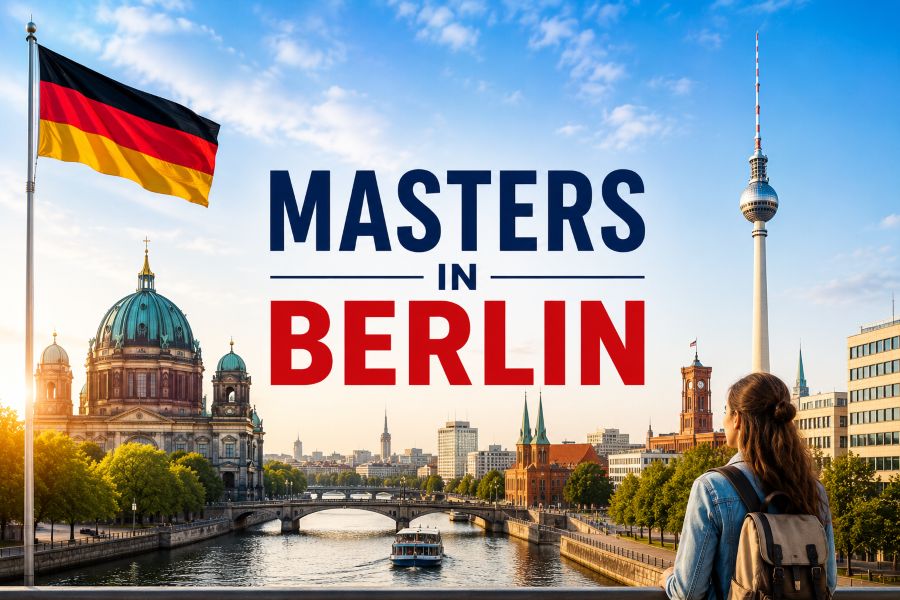
Study Masters in Germany
Explore top German cities with world-class universities and low tuition.
Pursue top-ranked master’s programs in Germany with strong career outcomes.
Follow these simple steps to start your study abroad journey
Choose the best universities and programs based on your goals.
Prepare and complete required standardized tests.
Submit your application to selected universities.
Complete visa process and prepare for departure.
Everything you need to know before you begin your study abroad journey
Yes, the APS (Akademische Prüfstelle) certificate is now mandatory for Indian students applying to German universities. It verifies the authenticity of your academic documents before you apply for admission or a visa.
You must apply for APS before or alongside your university applications because:
The APS process can take 3–6 weeks, so it’s advisable to apply early. Without it, your application may be delayed or rejected.
Yes, you can study in Germany without German if you apply to English-taught programs, which are widely available in fields like Computer Science, Data Science, Engineering, and Business.
So while German is not always mandatory for admission, it becomes important for long-term career success.
Most German universities expect a minimum of 2.5–3.0 GPA on the German scale, which roughly translates to:
A strong SOP, relevant projects, and internships can sometimes compensate for slightly lower grades.
Winter intake offers more courses and higher acceptance chances, so most international students prefer it.
Admission to German universities is moderately competitive, but not as unpredictable as countries like the US.
Unlike some countries, profile fit matters more than just scores. If your academic background matches the course requirements, your chances improve significantly.
Yes, international students are allowed to work 120 full days or 240 half days per year.
Part-time work can help cover monthly expenses, but it may not fully fund your education.
Germany offers a clear pathway to permanent residency (PR) for international graduates.
Germany is considered one of the more structured and realistic PR pathways in Europe.
Yes, German universities generally accept gap years, provided you can justify them.
Unexplained gaps may weaken your application, so it’s important to clearly explain your timeline in your SOP.
Yes, health insurance is compulsory for all international students in Germany.
Public insurance is generally recommended for most students.
Switching fields is limited and often difficult in Germany.
Major switches (e.g., Commerce to Computer Science) are usually not accepted unless you have strong supporting experience or certifications.
Germany offers strong job prospects, especially in STEM fields.
Students who combine technical skills + basic German + internships typically have significantly higher placement success.
Quick Overview:
Key Highlights: Masters in Germany
| Key Highlights | Details |
|---|---|
| Top Universities | TUM, LMU Munich, Heidelberg University, RWTH Aachen, University of Bonn |
| Course Duration | 1 to 2 years postgraduate |
| Popular Fields | Computer Science, Engineering, Finance, Management, AI |
| QS World University Rankings 2027 | #25 (TUM, Germany's highest-ranked university) |
| Tuition Fees | €0-1,500/semester at public universities (INR 0-1.60 lakh/semester) |
| Living Expenses | €992.80-1,108.60/month (INR 1.06L-1.18L/month) |
| Total Annual Cost | €12,900-25,000/year (INR 13.7L-26.6L/year) |
| Post-Study Work Option | 18-month job-seeker visa after graduation |
| Language of Instruction | English (most postgraduate programmes); German helpful for daily life |
Germany is home to several globally ranked universities, split broadly between technical universities focused on engineering and applied sciences, and comprehensive universities covering medicine, law, humanities, and natural sciences.
The right university isn't always the highest-ranked one, it's the one offering the specific course, research facilities, and industry connections that genuinely match your career goals.
Best Universities in Germany for Masters:
| University | QS World University Rankings 2027 (Official) | Approximate Semester Fee (EUR/INR) |
|---|---|---|
| Technical University of Munich (TUM) | #25 | €0 tuition + €150-400 semester fee (INR 16,000-42,600) |
| LMU Munich | #61 | €0 tuition + €150-300 semester fee (INR 16,000-31,900) |
| Heidelberg University | #86 | €1,500/semester, Baden-Württemberg (INR 1.60 lakh/semester) |
| University of Bonn | #104 | €0 tuition + €300-350 semester fee (INR 31,900-37,200) |
| RWTH Aachen | #110 | €0 tuition + €300 semester fee (INR 31,900) |
| KIT Karlsruhe | #140 (tied) | €1,500/semester, Baden-Württemberg (INR 1.60 lakh/semester) |
| Humboldt University Berlin | #227 | €0 tuition + €300 semester fee (INR 31,900) |
Note: Most German public universities genuinely charge zero tuition for international students, funded directly by federal and state governments. The exception is Baden-Württemberg, home to Heidelberg, KIT, and Freiburg, where non-EU students pay EUR 1,500 (₹1.52 lakh) per semester specifically.
One of the biggest advantages of a Masters in Germany for Indian Students is the genuine breadth of English-taught programmes across engineering, computer science, finance, and management, all backed by direct ties to Germany's manufacturing and technology giants.
Below are some of the most popular masters courses in Germany and what they offer.
A Masters in Computer Science in Germany remains one of the most sought-after programmes for international students, with TUM, RWTH Aachen, and Humboldt Berlin all running strong, research-active departments feeding directly into Europe's tech industry.
Popular specialisations:
An Engineering Masters in Germany benefits from the country's deep industrial base, with TUM, RWTH Aachen, and KIT maintaining direct recruiting pipelines into BMW, Siemens, and dozens of automotive suppliers.
Popular specialisations:
A Masters in Finance in Germany prepares students for roles in investment banking, corporate finance, and fintech, with Frankfurt's status as a major European financial hub giving graduates direct access to banking employers.
Popular specialisations:
A Masters in Management in Germany combines core business fundamentals with genuine exposure to Germany's export-driven economy, offered at both public universities and specialist private business schools like Mannheim and ESMT.
Popular specialisations:
Getting admission to a Masters in Germany for Indian Students involves meeting academic requirements, English or German proficiency, and, for many public universities, an APS certificate confirming your academic credentials.
1. Academic Qualifications
| Requirement | Details |
|---|---|
| Bachelor's Degree | A recognised bachelor's degree, generally with at least 3 years of study (4 years preferred for some programmes) |
| Minimum GPA | Around 65-75% or equivalent, varies by university and programme |
| APS Certificate | Required for most Indian applicants before applying to German public universities |
| Academic Transcripts | Official transcripts from all previously attended institutions |
2. GRE or GMAT Scores
| Test | Commonly Required For |
|---|---|
| GRE | Rarely mandatory; occasionally requested for highly competitive technical programmes |
| GMAT | Sometimes preferred for Management and Finance courses at private business schools |
| Test Waivers | Widely available at public universities for candidates with strong academic profiles |
3. English Language Proficiency
| English Test | Typical Score Range |
|---|---|
| IELTS Academic | 6.0-7.0 |
| TOEFL iBT | 80-100 |
| PTE Academic | 55-65 |
| Duolingo English Test | 105-120 |
4. Work Experience, Projects, or Research Exposure
| Programme Type | What Universities Typically Look For |
|---|---|
| Computer Science and Engineering | Internships, coding projects, research work, or technical portfolios |
| Finance and Management | 1-3 years of relevant work experience preferred for some programmes, though not always mandatory |
| Research-Based Programmes | Academic projects, dissertations, lab work, or publications |
5. Additional Documents
| Document | Purpose |
|---|---|
| Statement of Purpose (SOP) | Explains academic background, career goals, and programme fit |
| Letters of Recommendation (LORs) | Usually 2 academic or professional references |
| Resume/CV | Highlights education, internships, and technical skills |
| Financial Documents (Blocked Account) | Proof of funds required for the visa, currently EUR 992/month (₹1.00 lakh/month) |
The application process for a Masters in Germany becomes considerably easier once you know the sequence, especially given the APS certificate step that applies specifically to Indian applicants.
Step-1: Research universities and courses: Compare programmes based on curriculum, semester fees, location, and career outcomes.
Step-2: Obtain your APS Certificate: Indian applicants need this academic credential verification before applying to most public universities.
Step-3: Check eligibility requirements: Review GPA criteria, English proficiency scores, and course-specific prerequisites.
Step-4: Prepare for required tests: Take IELTS, TOEFL, PTE, or Duolingo as required.
Step-5: Gather application documents: Keep transcripts, SOP, LORs, resume, passport, and APS certificate ready.
Step-6: Submit university applications: Apply through uni-assist or the university's own portal, and track deadlines carefully.
Step-7: Accept the admission offer: Confirm enrolment and pay your semester fee.
Step-8: Apply for your German Student Visa: Once accepted, apply for your visa using your admission letter and blocked account proof.
Most German universities offer two main admission cycles each year, giving students flexibility depending on when they're academically and financially prepared.
| Intake | Classes Begin | Key Highlights |
|---|---|---|
| Winter Intake | September/October | The most popular intake, with the widest programme selection and strongest scholarship availability |
| Summer Intake | March/April | Available for select programmes; generally fewer course options than Winter |
The cost of studying masters in Germany is genuinely lower than most other major study destinations, since public universities charge little to nothing in tuition, with the main expense being the semester contribution and living costs.
Cost of Masters in Germany:
| University Type | Approx. Semester Fee (EUR) | Approx. Cost (INR) |
|---|---|---|
| Public Universities (most states) | €150-400/semester | INR 16,000-42,600/semester |
| Public Universities (Baden-Württemberg) | €1,500/semester | INR 1.60 lakh/semester |
| Private Business Schools (Mannheim, ESMT) | €20,000-50,000/year | INR 21.3L-53.2L/year |
Living expenses depend heavily on the city, with Munich and Frankfurt running noticeably higher than Leipzig, Dresden, or Dortmund.
| Expense Category | Estimated Monthly Cost (EUR) | Approx. Cost (INR) |
|---|---|---|
| Cost of living, single person, excluding rent | €992.80-1,004.00 | INR 1.06L-1.07L |
| Munich (Numbeo, single person, excluding rent) | €1,108.60 | INR 1.18 lakh |
| Rent (1-Bedroom, city centre) | €920-996 | INR 97,900-1.06 lakh |
| Public Transport (Deutschlandticket) | €63 | INR 6,700 |
Source: Numbeo
Taking semester fees and living expenses together, the total annual cost of a Masters in Germany generally ranges between EUR 12,900 and EUR 25,000 (approximately INR 13.7L-26.6L) at most public universities, considerably lower than the UK, US, or Canada.
Studying for a Masters in Germany is already affordable, and several scholarships can further reduce your expenses. Popular Masters scholarships in Germany, such as DAAD and the Deutschlandstipendium, help eligible students cover living costs or other study- related expenses.
| Scholarship | Eligibility | Coverage |
|---|---|---|
| DAAD Scholarships | International students meeting DAAD's specific programme criteria | Monthly stipend, varies by programme |
| Deutschlandstipendium | Talented students, regardless of nationality or income | €300/month (₹30,400/month) |
| Erasmus+ | Students on eligible exchange or joint degree programmes | Tuition and mobility grant support |
| Heinrich Böll Foundation Scholarship | Students with academic merit and social/political engagement | Tuition and living stipend |
| Konrad Adenauer Foundation Scholarship | Academically strong students demonstrating civic engagement | Monthly stipend plus study allowance |
A Masters in Germany can build genuine careers in engineering, finance, consulting, and technology, backed by an 18-month post-study work visa that lets graduates search for qualified employment without needing immediate sponsorship.
Here are top job roles along with approximate salary ranges in 2026:
| Job Role | Approx. Annual Salary (EUR) | Approx. Annual Salary (INR) |
|---|---|---|
| Consultant | €53,075-75,000 | INR 56.5L-79.8L |
| Product Manager | €60,685-90,000 | INR 64.6L-95.8L |
| Finance Manager | €65,000-103,000 | INR 69.2L-109.6L |
| Project Manager | €58,000-94,750 | INR 61.7L-100.9L |
| Business Analyst | €51,825-71,000 | INR 55.1L-75.5L |
| Senior Consultant (Frankfurt) | €71,000-97,000 | INR 75.5L-103.2L |
Source: Glassdoor
A Masters in Germany remains one of the strongest value propositions in international education, given that most public universities genuinely charge little to nothing in tuition, even for international students. The real cost sits almost entirely in living expenses, and even those run considerably below comparable programmes in UK, US, or Canada.
The biggest advantage isn't just the near-free tuition, it's the direct industry access. TUM's connections to BMW and Siemens, RWTH Aachen's automotive supplier pipeline, and Frankfurt's banking sector all mean German Masters degrees translate directly into recruiting relationships most other countries can't replicate at this price point.
That said, choosing the right university and city matters more than chasing the highest QS rank alone. Munich and Frankfurt carry genuinely higher living costs, while cities like Leipzig, Dresden, or Dortmund keep your overall budget considerably lower without sacrificing programme quality. If you're strategic about your APS certificate timeline, apply early for DAAD or Deutschlandstipendium funding, and pick a university that matches your specific career goals, a Masters in Germany can deliver genuinely strong long-term value across engineering, computer science, finance, and management.
Many public universities in Germany charge no tuition fees for most Masters programs, but students are still required to pay a semester contribution. However, some states and specialized programs may charge tuition, so it's important to check the university's official fee structure before applying.
A 7 CGPA is accepted by many German universities, especially if you have a relevant academic background and meet the course requirements. Your SOP, language test scores, internships, and overall profile can also strengthen your application, particularly at competitive institutions.
For students enrolling at public universities with little or no tuition, ₹20 lakh can often cover living expenses and other study-related costs for one to two years. If you're attending a private university, you'll likely need a larger budget due to higher tuition fees.
Yes. Germany offers internationally recognized degrees, research-focused education, affordable public universities, and strong career opportunities after graduation. It is especially popular among students planning careers in engineering, technology, business, and applied sciences.
The Winter Intake is generally the preferred choice because it offers the widest selection of courses and universities. While the Summer Intake is available for selected programs, the number of seats and course options is usually more limited.
Yes. International students can work part-time while studying, helping them gain professional experience and manage living expenses. Many students also take up Werkstudent roles that are closely related to their field of study.
Most Masters programs in Germany are completed in 18 to 24 months, although the duration may vary depending on the university, specialization, and whether the program includes research, internships, or a thesis.
Yes, many universities consider applicants with backlogs, provided they have successfully completed their bachelor's degree. The total number of backlogs, academic performance, and the competitiveness of the program all play a role in the admission decision.
Some universities waive IELTS if your previous education was conducted entirely in English or if you can provide an official Medium of Instruction (MOI) certificate. Admission policies differ, so applicants should verify the language requirements with each university.
Engineering, Computer Science, Data Science, Artificial Intelligence, Business, Mechanical Engineering, Automotive Engineering, Renewable Energy, and Public Health are among the most sought-after Masters programs. Germany's strong industrial and research ecosystem makes these fields particularly attractive.
Yes. Germany offers excellent career prospects, a high quality of life, and opportunities to gain international work experience. With a growing demand for skilled professionals across multiple industries, many Indian graduates choose to build long- term careers in Germany after completing their Masters degree.
Yes. A Master Degree in Germany for International Students offers access to world- class universities, affordable education, globally recognized qualifications, and excellent career opportunities. With a wide range of English-taught programs and strong post-study work options, Germany continues to be one of the top choices for students from around the world.
Absolutely. A Masters in Computer Science in Germany opens doors to careers in Germany's expanding technology sector. Many graduates secure jobs in software development, machine learning, IT consulting, and product engineering, with opportunities to stay and work after completing their degree.